
The Standard of Solitude
How to deepen the relationship you have with yourself.
I recorded many of the thoughts that went into this article while driving from Colorado to Arizona in late February 2026, a solo road trip that took about twelve hours in one day. My destination was Major League Baseball’s spring training, where I watched six ball games over the next five days under the warm Arizona sun, before returning to Colorado by road on my final day away.

Between the drives, hours at the various ballparks, and the stretches of time in between games, I spent virtually the entire week in solitude; the only meaningful time I spent with someone was an evening game with a longtime friend from my college days. For many people, that much time alone might sound isolating. For me, it was energizing.
“I never found the companion that was so companionable as solitude.”
- Henry David Thoreau
In recent years, solitude has become one of the most important practices in my life. While I have always craved it and embraced it, I became aware of how essential it was to me after leaving my hometown of Chicago in 2021. That’s when I made the decision to spend an indefinite amount of time traveling across the country, given that my business had gone fully remote during the pandemic.
What began as a loose plan to see different parts of the U.S. gradually evolved into nearly three years of road trips, extended stays in unfamiliar places, and long stretches of time spent entirely by myself. In total, I likely spent approximately 20,000 hours (!) alone during that period.
At first, that time was merely a byproduct of traveling. Over time, however, it became something else entirely: a laboratory for self-reflection.
It was during those long stretches of solitude that I began to recognize something about myself: I need time alone in order to think clearly, to reflect deeply, and to grow intentionally. I always knew that, and created space for it around my life’s responsibilities (work, family, house, and so on). But I had never recognized how much I really needed.
Solitude, for me, functions like oxygen. It creates the conditions in which I can fully concentrate on what I want to examine - my thoughts, my emotions, my decisions, and the standards by which I want to live.
Solitude vs. Loneliness
One of the questions I heard a number of times during my travels was, “Don’t you get lonely?” My answer was always, “No.”
When it comes to solitude, it’s important to distinguish it from loneliness because, while they are often spoken about as if they are the same, they are fundamentally different experiences.
Loneliness is not simply the state of being alone. It is the feeling of being disconnected.
In psychology, loneliness is often described as the gap between the connection we desire and the connection we experience.1 That gap can show up in obvious ways, such as the absence of close relationships, but it can also exist in far more subtle forms: when we feel misunderstood, unseen, or unable to fully relate to the people around us. In that sense, loneliness is less about how many people are present in our lives and more about whether we feel connected to them in a meaningful way.
Researchers often point out that loneliness is a subjective experience. It is not determined by how many relationships we have, but by how those relationships are perceived.2
That is why someone can be surrounded by people and still feel alone, while another person can spend long stretches of time on their own and feel completely at ease.
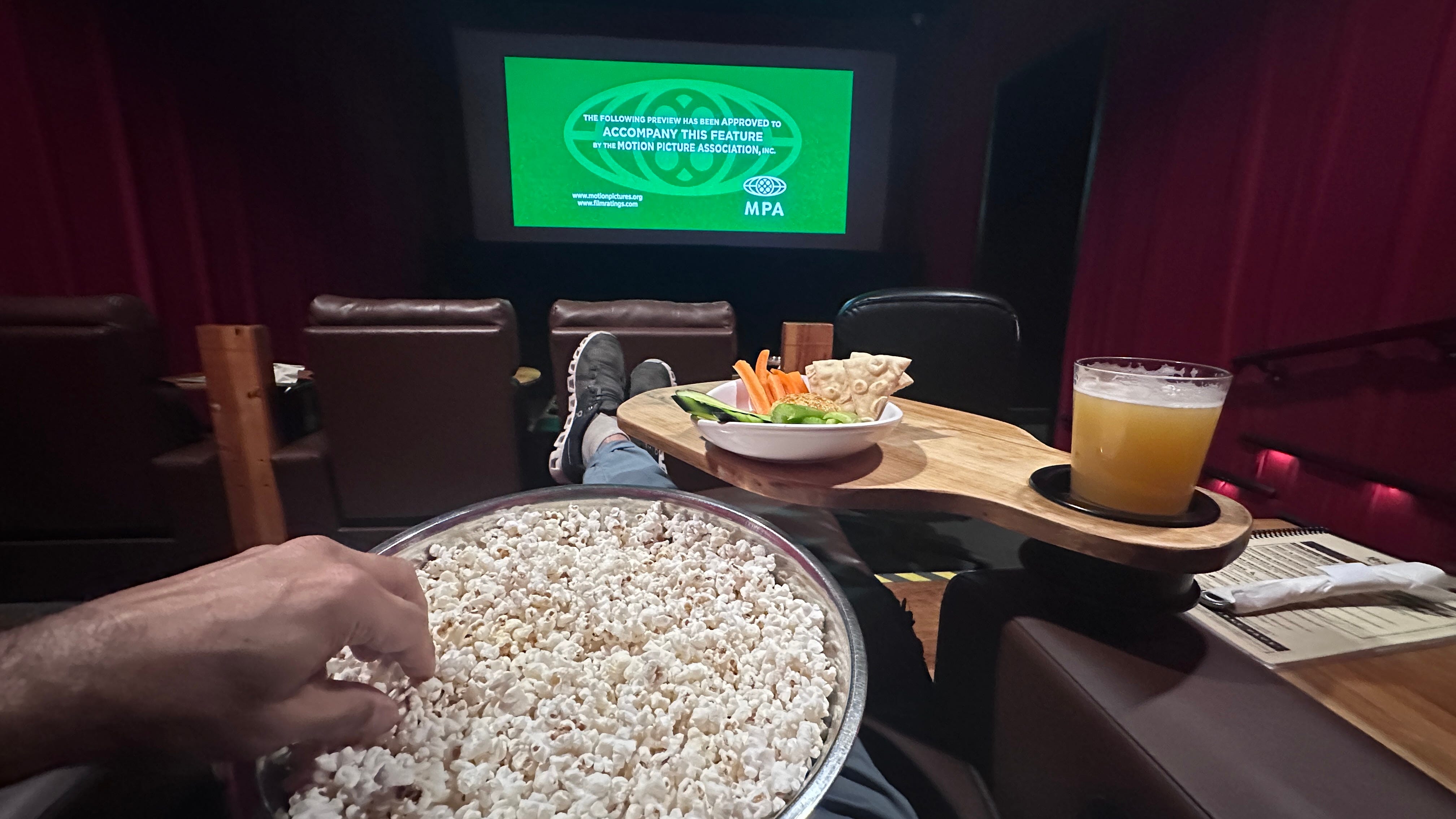
Because of this, loneliness is rarely something we choose. It is something that emerges. It reflects the conditions of our lives, our relationships, and our sense of belonging within them. In some cases, it may point to a lack of meaningful connection. In others, it may signal that the connections we do have are not fully aligned with who we are.
Solitude, by contrast, is something we choose.
It is the intentional decision to spend time with ourselves, not because connection is lacking, but because attention is needed. In contrast to loneliness, which is often studied as a state of perceived social disconnection, solitude is simply the condition of being alone; one that, when chosen, enables reflection, restoration, and personal clarity.
Where loneliness carries a sense of absence, solitude carries a sense of presence. It is not defined by what is missing, but by an awareness of what is here.
This distinction becomes clearer in practice.
In my own experience, time spent in solitude does not feel empty. Whether it is part of a morning routine, a long walk, or a few hours spent reading or writing, those moments tend to feel full…occupied by thought, reflection, and quiet engagement with myself. It’s almost as if my mind begins organizing itself by revisiting experiences, processing emotions, and making sense of things that I couldn’t examine while with other people.
Even during periods of extended time alone, such as my recent trip to Arizona, I did not experience loneliness in any meaningful way. There were moments when I felt a sense of distance from people who matter to me, but that feeling was not one of disconnection. It was simply an awareness of physical separation, one that could be softened - or even erased - with a conversation, a message, or a brief exchange that reminded me those relationships are very much intact.
That difference has become increasingly meaningful to me.
Solitude does not require the absence of relationships, nor does it weaken them. If anything, it creates the space in which we can better understand the relationships we have: what they mean to us, how we show up in them, and what we may want to change or deepen over time. It allows us to return to those relationships with greater clarity, rather than moving through them on autopilot.
Loneliness points to something unresolved. Solitude creates the conditions in which something can be understood.
And over time, learning to recognize the difference between the two begins to change how we experience being alone.

Solitude and Self-Awareness
Much of my professional work centers on emotional intelligence and self-awareness. In my framework, self-awareness is built on several interconnected capacities: emotional awareness, self-image, self-confidence, and personal clarity. While these concepts can be discussed in classrooms, workshops, or conversations with others, I have come to believe that they cannot truly develop without solitude.
Consider emotional awareness. In order to understand our emotions - what we feel, why we feel it, and how those emotions influence our behavior - we must be able to observe ourselves with sustained attention. Research in psychology has shown that even short periods of intentional solitude can reduce high-arousal emotions like anxiety and help people emotionally “reset,” lowering stress responses and increasing calmness.3 That observation becomes almost impossible in the presence of stimulation from the outside world.
Conversations, responsibilities, technologies, and the subtle social pressures of everyday life continually pull our attention outward. When we step away from constant social input, the mind begins to wander and form unexpected connections. This mental state—often occurring during walks, showers, or quiet drives—has been linked to creative insights and “aha” moments.4
Solitude reverses that direction. It creates the conditions in which attention can move inward.
When I am alone, I can examine my emotional responses with greater clarity. I can ask questions that rarely surface in the middle of a busy day: Why did that conversation affect me the way it did? What exactly am I feeling right now? What belief or expectation sits beneath that emotion? Those kinds of questions require patience, quiet, and uninterrupted thought.
“The greatest events - they are not our loudest but our stillest hours.”
- Friedrich Nietzsche
The same is true when reflecting on self-image. How we perceive ourselves - our strengths, our weaknesses, and the way we believe others see us - is shaped over time through experience and feedback. Yet making sense of that feedback requires distance. Without time alone to process what we hear from others, those impressions remain scattered and unexamined.
Self-confidence also grows in solitude. Confidence is often misunderstood as something that emerges solely from external success, but much of it is actually cultivated internally. It grows when we reflect on past experiences, when we revisit moments of resilience, and when we strengthen the internal dialogue that guides our behavior. Those processes occur quietly, often without witnesses, in the moments when we are simply thinking.
And perhaps most of all, solitude plays a critical role in developing personal clarity. In my opinion, personal clarity is achieved when we articulate our values, define our purpose, and live our life accordingly. It is where we attempt to answer the most fundamental questions of a life: What matters to me? What kind of person do I want to be? What kind of relationships do I want to cultivate? What is my reason for existence at this stage of my life? Why am I here?
Every meaningful attempt I have made to answer those questions - writing personal mission statements, crafting values statements, reflecting on how I want to be remembered - has taken place in solitude. These are not conversations we can outsource to other people. They are reflections that must be wrestled with privately, often slowly, until something meaningful emerges.
Learning from Thoreau
Few writers have explored solitude more thoughtfully than Henry David Thoreau. In Walden, Thoreau recounts the two years he spent living in a small cabin near Walden Pond, an experiment designed to simplify his life and deepen his understanding of it. His famous line - “I went to the woods because I wished to live deliberately” - captures the essence of that experiment.
Thoreau was not simply seeking isolation for its own sake. Rather, he believed that stepping away from society could help clarify what truly mattered.
A few years ago, I had the opportunity to visit Walden Pond myself while driving through Massachusetts. Walking along the path that circles the pond, I found myself reflecting on Thoreau’s experiment and the influence his writing has had on generations of readers.
What struck me most was the intentionality of his solitude. Thoreau did not retreat from the world permanently; he stepped away long enough to observe it more clearly. His time alone became a tool for understanding life rather than escaping from it.

Solitude and the Standards We Set
My writing over the past several years (captured in this Substack) has focused heavily on the idea of standards, particularly how they differ from expectations.
In most cases, expectations are directed outward. They are beliefs about what we think other people will do, should do, or how we think situations should unfold. Standards, by contrast, are directed inward. They are commitments we make to ourselves about how we want to behave and how we want to live.
What I have come to realize is that solitude plays a vital role in the formation of those standards.
Standards are not discovered casually. They emerge through reflection. In order to define how we want to show up in our work, in our friendships, and in our partnerships, we must first understand our values and priorities. That understanding cannot be rushed, nor can it be developed entirely through conversation with others.
It requires time alone.
When we step away from the noise of daily interaction, we gain the ability to examine our own behavior more honestly. We can revisit moments when we felt proud of how we acted and moments when we did not. We can ask ourselves whether our behavior truly reflects the person we want to become. Over time, those reflections begin to crystallize into personal standards - guidelines that shape how we approach our lives and relationships.
In this sense, solitude strengthens not only our relationship with ourselves but also our relationships with others. The clearer we become about our own values and standards, the more intentionally we are able to show up for the people around us.
Solitude and Deliberate Practice
Solitude also plays an essential role in deliberate practice, a concept from psychology and performance research.5 Deliberate practice refers to the focused effort to improve specific skills by working directly on areas of difficulty. It requires intense concentration, repeated self-correction, and sustained attention to detail. Most relevantly, the science found that it is only when we are alone when we can truly engage in deliberate practice. Coaches and mentors can help or guide the process, but our ability to go precisely where practice is needed is only possible when we’re alone.
A tennis player may receive instruction from a coach during a lesson, but the most demanding work often occurs in the moments between strokes - when the player rehearses the movement internally, corrects a flaw in their footwork, or mentally prepares for the next shot. That internal dialogue cannot be outsourced. It happens inside the tennis player’s own mind.
“Without great solitude no serious work is possible.”
- Pablo Picasso
The same dynamic applies to many aspects of personal growth. Skills such as emotional regulation, empathy, communication, and leadership can certainly be learned through interaction with others. Yet improving those abilities often requires private reflection beforehand and afterward. We replay conversations in our minds, examine where we could have responded differently, and mentally rehearse how we might handle similar situations in the future.
Those quiet moments of reflection are a form of deliberate practice. Studies suggest that solitude improves the brain’s ability to reflect on decisions, recognize patterns in behavior, and evaluate one’s own thought processes—key elements of self-awareness and learning.6
A beautiful coincidence is the relationship between this modern scientific concept and Thoreau’s line from Walden - “I went to the woods because I wished to live deliberately” - that came more than 150 years earlier. It can thus be argued that Thoreau was seeking to practice how to live in a deliberate way.

Solitude as a Practice
Modern life is filled with constant stimulation: messages, conversations, responsibilities, and distractions that fill nearly every available moment. Parents talk about children being over-scheduled. White-collar professionals strive for work-life balance. Adults and children alike lament their use of social media and doomscrolling. Weekends zoom by because of binge-watching.
One of the most important lessons I have learned over the years is that solitude rarely happens by accident. If we do not intentionally create time for solitude, that time will tend to disappear.
That is why I have come to view solitude not merely as a circumstance but as a practice. Like exercise or journaling, it is something we must choose deliberately. It may take the form of a long walk without devices, a quiet hour spent writing or reflecting, hours alone in the car, or a period of time dedicated to reviewing the direction of our lives.
Sometimes the reflection is informal. I might simply think about how I am performing in different roles - whether as a partner, a friend, a parent, or a professional. At other times, the reflection becomes more structured: writing in a journal, revisiting personal values, or examining larger philosophical questions about the direction of my life.
The purpose may vary, but the practice remains the same: carving out intentional space to turn inward.
The Relationship with Ourselves
Ultimately, solitude strengthens the most fundamental relationship we have: the one with ourselves.
Every interaction we have with other people is influenced by how well we understand our own thoughts, impulses, emotions, values, and intentions. When that internal understanding is weak, our behavior tends to be reactive. We respond without thinking, often guided by habits we have never fully examined.
When that understanding becomes stronger, our behavior becomes more deliberate.
The time we spend in solitude is not separate from our relationships with others. It is preparation for them. The clarity we develop while reflecting alone eventually shows up in the world through our decisions, our words, and the standards we hold ourselves to. Studies examining “self-determined solitude” show that when people choose to spend time alone for meaningful reasons, they report stronger feelings of autonomy, competence, and personal satisfaction.7
In that sense, solitude is not withdrawal from life. It is one of the ways we can lean into it.
https://psycnet.apa.org/record/1982-26715-001
https://press.uchicago.edu/ucp/books/book/chicago/L/bo5417962.html\
https://www.psychologytoday.com/us/blog/the-joy-of-solitude
https://www.psychologytoday.com/us/blog/the-joy-of-solitude/202509/making-it-alone-5-ways-solitude-can-spark-creativity
https://psycnet.apa.org/record/1993-40718-001
https://vocal.media/psyche/the-science-of-solitude-why-being-alone-is-beneficial-for-the-mind
https://www.sciencedirect.com/science/article/pii/S0193397325001406